
Securing Your Digital Assets with Cold Wallets: The Smart Investor's Guide to Crypto Security
As the world of cryptocurrency expands, so does the need for robust, personal security. While crypto offers decentralization and ownership, it also places full responsibility in the hands of users. In this context, cold wallets—especially hardware wallets—have become an essential tool for safeguarding digital assets.
Whether you're a long-term investor, an active trader, or simply holding a few tokens, this guide walks you through the benefits of cold wallets, how they work, and which ones are best suited for different use cases.
What is a Cold Wallet?
A cold wallet is a type of cryptocurrency wallet that stores private keys offline, making it immune to most forms of cyberattacks like phishing, malware, or exchange hacks. The most popular form of cold wallets is hardware wallets—physical devices that plug into your computer or communicate via QR codes or Bluetooth to securely sign transactions.
Cold Wallet vs. Hot Wallet: A Quick Comparison

Comparison of security, convenience, and use cases between cold and hot wallets
Cold Wallets (Hardware/Offline)
- Security: High - Private keys stored offline
- Accessibility: Lower - Physical device required
- Cost: $50-$250 (one-time purchase)
- Best For: Long-term storage, large holdings
Hot Wallets (Software/Online)
- Security: Medium - Connected to internet
- Accessibility: High - Always available
- Cost: Free (usually)
- Best For: Daily transactions, small amounts
Key Benefits of Cold Wallets
Maximum Security
Cold wallets are offline—which means even if your phone or laptop gets compromised, your funds are protected from online attacks.
True Ownership
By holding your own private keys, you're in full control of your crypto—"Not your keys, not your coins" is the golden rule.
Protection from Exchange Risks
Centralized exchanges are targets for hacks and regulatory shutdowns. A cold wallet isolates you from those risks.
Versatility
Modern hardware wallets support multiple blockchains and tokens, and even DeFi, NFTs, and staking directly from the device.
Top 10 Cold Wallets (Hardware Wallets) & Use Cases
Here's a curated list of the most reliable hardware wallets with ideal user profiles:
1. Ledger Nano X
2. Trezor Model T
3. Ledger Nano S Plus
4. Coldcard Mk4
5. BitBox02 (Bitcoin-only Edition)
6. Keystone Pro
7. Ellipal Titan 2.0
8. SecuX V20
9. D'CENT Wallet
10. SafePal S1
How to Choose the Right Cold Wallet
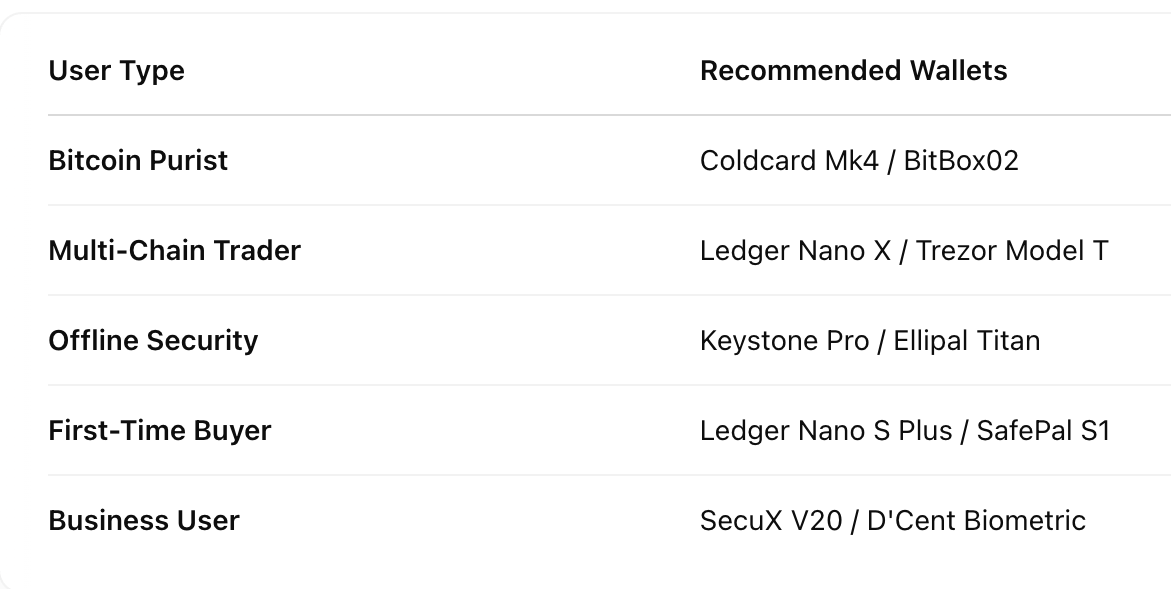
Decision flowchart for selecting the right cold wallet based on your needs and profile
New Investors
Start with budget-friendly options like Ledger Nano S Plus or SafePal S1. Focus on ease of use and good customer support.
- Prioritize user-friendly interfaces
- Look for multi-coin support
- Consider mobile compatibility
Active Traders
Choose wallets with Bluetooth connectivity and mobile apps like Ledger Nano X. Speed and convenience matter for frequent transactions.
- Bluetooth/wireless connectivity
- Mobile app integration
- Fast transaction signing
Long-term Holders
Prioritize maximum security with air-gapped devices like Coldcard or Ellipal. Consider Bitcoin-only wallets for purists.
- Air-gapped operation
- Open-source firmware
- Advanced security features
Final Thoughts
In the fast-evolving Web3 space, self-custody is no longer optional—it's essential. If you're serious about preserving your wealth and future-proofing your digital assets, investing in a cold wallet is one of the smartest decisions you can make.
Whether you're a weekend HODLer or a full-time crypto strategist, there's a cold wallet designed to fit your security needs, budget, and technical comfort level.
Remember: The cost of a hardware wallet is minimal compared to the value it protects. In crypto, your security is your responsibility—invest in it wisely.
Start Small
Begin with a budget-friendly wallet and upgrade as your portfolio grows
Test First
Always test with small amounts before transferring significant funds
Backup Securely
Store your recovery seed phrase in multiple secure locations