
The Digital Shift: Tokenization as the Engine for Africa's Next Economic Boom
How Blockchain Is Unlocking Trillions in Untapped Capital and Driving Financial Inclusion Across the Continent
Africa stands at an unprecedented moment. Despite being rich in natural resources, human capital, and entrepreneurial energy, the continent continues to face structural barriers—limited access to capital, financial exclusion, costly cross-border payments, shallow capital markets, and fragmented regulatory systems. Today, blockchain technology and real-world asset (RWA) tokenization are emerging as transformative tools capable of breaking these long-standing bottlenecks and unlocking Africa's immense economic potential.
The global tokenization market reached $22.6 billion by May 2025 and is projected to surpass $50 billion by year-end. By 2030, it is expected to hit $2–4 trillion. If Africa captures even a small share, the impact could fundamentally reshape investment markets, democratize asset ownership, and accelerate inclusive growth across all sectors—from real estate and agriculture to remittances and infrastructure.
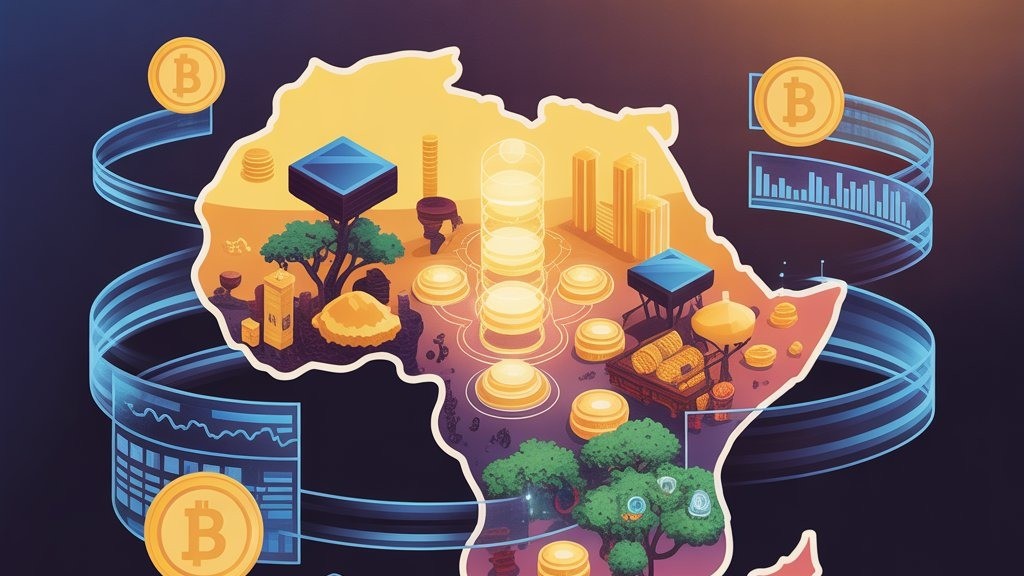
The Tokenization Revolution: What's Driving Africa's Digital Transformation?
Understanding Asset Tokenization in the African Context
Asset tokenization involves converting real-world assets into digital tokens on a blockchain, representing ownership rights, revenue shares, or fractional stakes in tangible assets. For Africa, this technology offers solutions to long-standing problems that have constrained economic development.
The continent possesses enormous wealth in land, minerals, agriculture, and real estate, yet accessing capital markets remains difficult for most citizens and businesses. Africa's real estate market alone is expected to exceed $1.4 trillion by 2030, but less than 1% of this total is institutionally accessible. Tokenization can transform these illiquid assets into tradable, fractional investments accessible to both domestic and international investors.
Why Africa is Uniquely Positioned for Tokenization
Mobile-First Infrastructure
Africa has leapfrogged traditional banking through mobile money adoption. The continent has 1.1 billion mobile money accounts, creating a foundation for digital wallet-based blockchain services. In Kenya, mobile subscriptions exceed the population at approximately 122 SIMs per 100 people, demonstrating widespread digital connectivity.
Young, Tech-Savvy Population
Africa hosts at least 9 of the world's 20 fastest-growing economies in 2025, driven by young populations eager to adopt new technologies. This demographic advantage positions the continent to embrace blockchain solutions faster than regions burdened by legacy financial systems.
High Cryptocurrency Adoption
Africa leads globally in grassroots cryptocurrency adoption. Sub-Saharan Africa's on-chain crypto transaction volume exceeded $205 billion between July 2024 and June 2025, marking a 52% year-on-year increase. Nearly 50% of Nigerians already use cryptocurrencies, one of the highest rates in the world.
Critical Need for Financial Solutions
In Africa, around 57% of adults still lack bank accounts, but crypto and mobile wallets are emerging as alternatives. This financial exclusion creates urgent demand for alternative solutions that tokenization can provide.
The $100 Billion Remittance Opportunity: Turning Transfers into Investment
The Current State of African Remittances
Remittances represent one of Africa's largest and most stable sources of external finance. Remittance inflows to Africa surged from approximately $53 billion in 2010 to roughly $95 billion in 2024, increasing from 3.6% to 5.1% of the continent's GDP. Total remittance inflows to Africa surpassed $100 billion in 2024 and are on track to exceed $120 billion by the end of 2025.
Yet these massive flows face significant friction. The average cost of sending money through mobile applications to Africa was around 5% in 2023, far above the UN Sustainable Development Goal target of reducing transfer costs to 3% by 2030. Africa remains the most expensive region to send money to, with fees averaging nearly 8%-9% per transaction.
How Blockchain is Transforming Remittances
Blockchain technology dramatically reduces these costs. By removing correspondent banks and money transfer operators, blockchain reduces operational overhead and lowers fees from the typical 6-7% for $200 transfers to 1-3% in many corridors. Transactions that previously required 2-7 days can be completed within minutes or seconds through decentralized validation.
Blockchain remittances now represent an estimated $80-115 billion annually globally, with Africa capturing an increasing share. Remittance transaction volumes in high-adoption regions such as Latin America and Africa are growing by around 50% annually.
Stablecoins: The Bridge to Financial Inclusion
Stablecoins have emerged as critical infrastructure for African finance. USD-pegged stablecoins dominate at 99%, led by Tether (USDT, $156 billion) and USD Coin (USDC, $60 billion). In Africa, stablecoins facilitate 45% of peer-to-peer transactions.
Global stablecoin transactions exceeded $5.7 trillion in 2024, with emerging markets including Nigeria, India, and Mexico seeing particularly strong adoption. Eighty-four percent of investors use stablecoins for yield (73%), foreign exchange settlement (69%), and operational efficiency (71%).
From Remittances to Investment Capital
The transformative opportunity lies in converting remittance flows into productive investment. Africa's diaspora sends home more than $50 billion annually in remittances—more than official development assistance and, in many countries, exceeding foreign direct investment.
If even 10% of diaspora flows were channeled into regulated, tokenized assets, the impact would be transformational—Ghanaian nurses in London, Nigerian engineers in Houston, or Senegalese students in Paris could invest directly in certified agro-processing plants back home, earning returns while fueling job creation.
Real Estate Tokenization: Democratizing Property Investment
The Market Opportunity
Africa's real estate sector represents enormous untapped potential. Africa's real estate market is expected to exceed $1.4 trillion by 2030, but less than 1% of that total is institutionally accessible. Traditional barriers—high capital requirements, illiquidity, complex documentation—have kept most Africans from participating in property investment.
Tokenization removes these barriers by enabling fractional ownership. Instead of needing hundreds of thousands of dollars to purchase property, investors can buy tokens representing small shares, making real estate investment accessible to ordinary savers.
Real-World Implementation: Nigeria Leading the Way
Nigeria's Lagos property plan explicitly targets retail inclusion: by selling tokens, ordinary Nigerians can invest their savings in city real estate without needing a bank loan or large downpayment.
The regulatory environment is evolving to support these innovations. Nigeria's Investment and Securities Act (ISA) 2025, signed into law in March 2025, formally recognizes digital assets and crypto-tokens as securities under the Nigerian Securities and Exchange Commission's mandate. The ISA 2025 designates the Securities and Exchange Commission as the sole regulator for virtual assets and classifies all digital assets as securities, ending years of fragmented oversight.
Kenya's Digital Exchange Vision
The Nairobi Securities Exchange envisions the Kenya Digital Exchange (KDX) as a fully regulated platform to trade tokenized real-world assets, with NSE's CEO noting it will "unlock new investment opportunities, deepen market access, and position Kenya as a trailblazer in tokenization".
The Nairobi Securities Exchange has joined the Hedera Council, a global governance body overseeing the blockchain-enabled Hedera public ledger, with the goal to tokenize securities.
South Africa's Institutional Approach
South Africa has emerged as a regulatory leader. Under the Financial Advisory and Intermediary Services Act, crypto asset service providers are required to obtain a financial service provider license and comply with anti-money laundering obligations.
A South African school bond not only tapped the corporate sector but also drew ordinary savers: 24% of its token subscriptions were from non-institutional investors, demonstrating retail appetite for tokenized investment opportunities.
Agricultural Tokenization: Transforming Smallholder Farming
The Challenge: 500 Million Farmers Without Capital
Today 500 million smallholder farmers produce 80% of the food for the developing world. These farmers face persistent challenges including limited access to credit, high transaction costs, and barriers to markets. In Nigeria, SMEs account for around 50% of GDP and 76% of employment, while in Kenya, the figures are 40% and 93% respectively.
Tokenization Solutions in Action
Project Mocha - Kenya's Coffee Revolution
Project Mocha, launched in June 2024, is a Kenyan initiative that helps coffee farmers by tokenizing coffee trees on the blockchain, currently in pilot stage with 2,000 trees and a waitlist of 1,500 farmers.
The project allows smallholder farmers to sell tokens representing economic rights to coffee trees, giving tokenholders a share of coffee sales revenue for 10 years, enabling farmers to access funding for farm rehabilitation, equipment, and training.
One Million Avocados - Pan-African Impact
One Million Avocados uses orchard tokenization with the aim to plant a million avocado trees across Africa, providing farmers with training, linking them to other farmers, providing fertilizers, and helping access better markets.
Farmer Sophia Wambui Ngamate from Kenya's Nakuru County, age 54, reported that the project assisted her in planting more than 120 avocado trees, demonstrating tangible real-world impact.
Blockchain Platforms Serving African Agriculture
Several platforms are specifically targeting African farmers:
- AgriLedger: Focused on smallholder farmers in Africa, using blockchain to track produce and support financial inclusion through crop tokenization
- AgroBloc: Empowers smallholder farmers by tokenizing farmland into NFTs, enabling DeFi loans
- RainTrust: Uses the Stellar blockchain to power financial transformation from microfinance to supply chain, aiming to double small farm productivity by 2030
The Economic Impact
Tokenization addresses critical pain points for African agriculture:
- Access to Capital: Farmers can raise funds by tokenizing future harvests or land rights rather than depending on traditional banks that view them as high-risk borrowers.
- Supply Chain Transparency: Blockchain tracking from farm to consumer builds trust, enables premium pricing for quality products, and reduces the 43% food waste from buyer defaults.
- Global Market Access: Tokenization connects African farmers directly to international investors and consumers, eliminating exploitative intermediaries.
- Carbon Credit Monetization: Farmers practicing sustainable agriculture can tokenize carbon credits, tapping into global ESG investment flows.
Massive Infrastructure Initiatives: The $5.5 Billion Uganda Project
GSN and Diacente Group partnered to tokenize $5.5 billion in real-world assets across Africa, spanning food production, minerals, renewable energy, and cross-border trade.
The partnership launched Africa's largest tokenized infrastructure economy starting in Uganda, introducing a Central Bank Digital Currency pilot backed by Ugandan treasury bonds designed to promote inclusive, mobile-first financial access.
This sovereign-first model combines blockchain innovation with national economic frameworks, positioning Uganda and Africa more broadly as a global leader in blockchain-powered infrastructure transformation.
The Institutional Investment Wave: $235 Billion and Growing
Institutional Adoption Accelerates
By mid-2025, institutional digital asset assets under management surpassed $235 billion, up from $90 billion in 2022, fueled by clearer regulations, technological advances, and their role as inflation hedges. Institutions now control 65% of global crypto investments, mainly in the U.S. and Europe.
Africa Attracts Major Players
Ripple and Absa Bank Partnership
A landmark partnership announced in October 2025 between Ripple and Absa Bank—the largest bank in Africa by assets ($119.5 billion)—marks the launch of institutional-grade crypto custody infrastructure, enabling secure storage of cryptocurrencies and tokenized assets.
Blockchain.com African Expansion
Blockchain.com is expanding operations into several African countries including Ghana, Kenya, and South Africa, and plans to open a physical office in Nigeria, which it says is its fastest-growing market in West Africa.
Tether's Strategic Investment
Tether invested in Kotani Pay to accelerate blockchain-powered financial inclusion, with Kotani Pay's infrastructure enabling enterprises to manage international operations efficiently and offering businesses practical solutions to access global liquidity.
Venture Capital Momentum
African blockchain ventures captured 7.4% of VC capital and 12.7% of deals in 2024, up from 7.0% and 7.3% respectively in 2023. The median blockchain deal size reached $2.8 million, double the all-sector African median of $1.4 million.
Building the Ecosystem: Platforms, Councils, and Infrastructure
The Africa Tokenization Council
COTI announced the Africa Tokenization Council in March 2025, launched alongside strategic partners to drive AI and blockchain adoption across Africa and the Middle East, bringing together African officials with global leaders in blockchain and tokenization.
The Council will bring leaders, investors, and practitioners together through symposiums focused on partnerships, regulatory pathways, practices, and investments required to enable a thriving tokenization ecosystem.
Afreum: Pan-African Digital Economy Platform
Afreum, a decentralized economic ecosystem built on the Stellar blockchain focused on financial inclusion and real-world asset tokenization in Africa, announced the upcoming launch of Africa Wallet in November 2025.
The mobile super app will be powered by Afreum's $AFR token and integrate over 150 USDC-backed fiat tokens, enabling seamless cross-border payments, remittances, DeFi applications, and tokenized asset management.
Afreum's ecosystem includes 312 tokens total, with fiat tokens pegged to, minted with, and redeemed for USDC, while country tokens enable localized economies. Founded in 2020, Afreum now serves users in Africa and around the world.
Regulatory Evolution: From Fragmentation to Frameworks
Nigeria's Comprehensive Approach
Nigeria has emerged as a regulatory pioneer. Since 2024, Nigeria has made significant strides in regulating digital assets through the enactment of the ISA 2025, which brings virtual and digital assets under the SEC's oversight.
Issuers of tokenized assets are required to register both tokens and offerings with the SEC, while platforms facilitating such offerings must be licensed as Digital Asset Offering Platforms.
The framework is already showing market impact. A 2025 Bitget survey shows that 75% of Nigerian users plan to increase crypto investment.
South Africa's Dual-Track Strategy
South Africa released its 2024 Digital Payments Roadmap, explicitly citing stablecoins and tokenization as key priorities for modernizing finance. The South African Reserve Bank is piloting wholesale and retail CBDCs, and its fintech unit is working with local innovators.
South Africa's FSP regime imposes fit-and-proper requirements for directors and significant owners, balancing innovation with investor protection.
Kenya's Mobile-First Strategy
Kenya leverages its mobile-money infrastructure and interoperable IDs to bootstrap digital-asset platforms. Kenya's Virtual Asset Service Providers Act, 2025, imposes fit-and-proper requirements on directors, senior officers, and other persons as determined by the regulatory authority.
Kenya's Capital Markets Authority approved tokenized securities in 2022, establishing early regulatory clarity.
Ghana's Measured Approach
The Central Bank of Ghana set September 2025 as the deadline to regulate cryptocurrencies, with Governor Johnson Asiama announcing the country's intent to oversee this industry.
Ghana's new Gold Board integrates blockchain tracking, with regulatory focus on consumer protection and anti-smuggling.
Continental Coordination Emerging
South Africa, Nigeria, Ghana, and Uganda classify VASPs as accountable institutions, requiring registration with financial intelligence units and adherence to due diligence, reporting, and risk management protocols.
Regional frameworks offer integration opportunities. The African Continental Free Trade Area (AfCFTA)—which aims to unify trade across 54 countries—and the African Exchanges Linkage Project—which connects national stock markets—offer platforms where tokenized capital markets can be integrated across borders.
Real-World Impact: Measuring Tokenization's Economic Effect
Market Projections and Growth Trajectories
Globally, the tokenization market reached $24 billion in 2025, having grown nearly fivefold in three years with forecasts predicting $30 trillion by 2034. Even if Africa only contributes 1%, it has the potential to transform its investment landscape.
A report published by PwC predicts that the tokenization market in Africa could reach $100 billion by 2025.
Cryptocurrency User Base Expansion
Globally, crypto users reached 560 million, representing 6.8% of the world's population, driven by Bitcoin ETFs attracting $15 billion inflows in H1 2025 and real-world asset tokenization.
Blockchain Trends for 2026
McKinsey estimates put real-world asset tokenization on track to reach $2 trillion by 2030. Key technological developments include:
- Platforms like EigenLayer and Celestia are making blockchain more scalable, interoperable, and cost-efficient through modular architecture separating execution, consensus, and data availability.
- Banks and funds are issuing tokenized treasuries and bonds that trade 24/7 on-chain, bringing trillions in real-world assets to blockchain rails.
Agricultural Financing Case Studies: Transforming Lives
Namibian Copper Mine Tokenization
In July 2024, DAMREV, Africa's leading Real World Asset tokenization company, signed a landmark $330 million agreement to tokenize a copper mine in Namibia, marking a significant milestone for both the mining and blockchain industries.
The Nigerian government is using tokenization to transition high-value stakes in mining assets into more fractionalized assets so a much larger group of people can invest in them.
Ghanaian Cocoa Blockchain Initiative
A 2024 Cointelegraph report highlights a cocoa farming initiative in Ghana where each batch of cocoa is tracked on-chain using NFTs and fractional tokens, improving supply chain transparency and allowing small farms to earn premium prices by proving adherence to organic and fair-trade standards.
Direct Farmer Impact Stories
The human impact extends beyond statistics. African farmers are reporting tangible improvements:
- Access to upfront capital for farm improvements without selling land
- Premium pricing through verified quality standards on blockchain
- Direct connections to global markets eliminating exploitative middlemen
- Technical training and agricultural knowledge sharing through tokenization platforms
- Risk mitigation through diversified investor bases
Infrastructure Challenges and Solutions
The Digital Divide
Approximately 1.4 billion adults remain unbanked worldwide, and in 2025, crypto platforms offer access using only internet connectivity. However, infrastructure gaps persist.
Challenges include:
- Inconsistent internet access in rural areas
- Limited smartphone penetration in some regions
- Digital literacy barriers
- Last-mile delivery complexities
Solutions Emerging
- Mobile Money Integration: FinTech platforms including M-Pesa, MTN MoMo, and Airtel Money enable simple payments and cut costs drastically.
- Simplified User Interfaces: Platforms are developing mobile-first applications that work on basic smartphones with minimal data requirements.
- Hybrid On-Chain/Off-Chain Systems: Some projects use blockchain for security and transparency while maintaining off-chain databases for speed and cost-efficiency.
- Community Training Programs: Agricultural tokenization projects often include digital literacy training as part of farmer onboarding.
The Path Forward: Policy Recommendations and Strategic Priorities
For Governments and Regulators
Harmonized Regulatory Frameworks
Regulatory frameworks must evolve to support tokenized assets and new forms of digital organizations, meaning recognizing digital tokens as legal financial instruments, enforcing smart contracts in courts, and ensuring citizens can access these systems through secure, universal digital IDs.
Regional Coordination
Development finance institutions including the African Development Bank could incorporate blockchain into project finance and monitoring frameworks, ensuring faster disbursement, automated reporting, and better data integration through tokenized infrastructure bonds or climate finance tools.
Balanced Innovation and Protection
Regulators should create:
- Regulatory sandboxes for testing innovations
- Clear licensing pathways for digital asset service providers
- Consumer protection mechanisms
- Anti-money laundering frameworks adapted for blockchain
- Tax clarity for tokenized assets
For Financial Institutions
Infrastructure Investment
The heavy lift now is on upgrading infrastructure: secure networks, reliable ID/KYC schemes, and interoperability standards.
Custody Solutions
Major banks must develop institutional-grade custody for digital assets, as Absa Bank has done with Ripple.
Diaspora Engagement
Creating incentives for diaspora investment can turn remittances into long-term sources of development finance through structured savings, investment products, or diaspora bonds.
For Entrepreneurs and Innovators
Purpose-Driven Development
Unique, purpose-led blockchain companies are attracting funding to develop important financial services: crypto payments across nations, remittance and credit-building for Africans and diaspora.
Local Problem-Solving
The most successful African blockchain ventures solve local problems:
- Currency volatility hedging through stablecoins
- Cross-border payment friction through blockchain rails
- Financial exclusion through mobile-first wallets
- Agricultural financing through crop tokenization
User-Centric Design
Solutions must work for users with basic phones, limited internet, and minimal blockchain knowledge.
Risks, Challenges, and Mitigation Strategies
Regulatory Uncertainty
The largest barrier to wider adoption remains regulation, which is still geographically fragmented. To achieve the full promise of blockchain, the globe needs interoperable rules.
Mitigation: Engage proactively with regulators, participate in sandbox programs, build compliance into products from inception.
Technology Risks
- Smart contract vulnerabilities
- Blockchain security breaches
- Custody risks
- Platform failures
Mitigation: Regular security audits, insurance mechanisms, multi-signature wallets, gradual rollouts with extensive testing.
Market Volatility
Cryptocurrency price fluctuations can deter mainstream adoption and create financial instability.
Mitigation: Focus on stablecoins for transactions, education about volatility risks, hybrid fiat-crypto systems.
Digital Literacy Gaps
Many potential users lack understanding of blockchain, wallets, and digital security.
Mitigation: Comprehensive training programs, simplified user interfaces, community education initiatives, local-language support.
Infrastructure Limitations
Unreliable internet, limited electricity, and basic phones constrain access.
Mitigation: Offline-capable solutions, SMS-based transactions, solar-powered infrastructure, progressive web apps for basic phones.
Comparative Advantage: Why Africa Can Lead
Leapfrogging Legacy Systems
Where mature economies struggle with outdated registries and legal inertia, Africa can create native digital asset ecosystems that are transparent, compliant, and interoperable from the start.
This leapfrog opportunity mirrors Africa's mobile money revolution, where the continent surpassed developed nations by skipping traditional banking infrastructure entirely.
Real-World Use Cases Over Speculation
Africa distinguished itself as a global leader in the non-speculative use of stablecoins as digital financial infrastructure, with stablecoins offering what traditional banks and legacy rails often can't: access, low cost, instant settlement, and borderless efficiency.
African blockchain adoption is driven by necessity, not speculation, creating more sustainable and impactful use cases.
Demographic Dividend
Africa's young population represents both a market and a workforce for blockchain innovation. Tech-savvy youth are building solutions for African problems, creating authentic product-market fit.
Resource Abundance
The continent's vast natural resources—minerals, agriculture, renewable energy potential, land—provide abundant real-world assets to tokenize, creating immediate utility for blockchain infrastructure.
The $50 Billion Diaspora Question
Africa is not capital-poor—it's capital-locked. Domestic savings rates in many countries exceed 20% of GDP, yet much of this wealth sits idle or flows into low-yield, illiquid assets.
The diaspora represents not just a source of remittances but a potential investor base with:
- Emotional connection to home countries
- Understanding of local markets
- Access to foreign currency
- Higher risk tolerance for African investments
- Desire to contribute to development
What's missing are the institutional frameworks: clear regulations for digital securities, trusted custodians, interoperable platforms, and investor education.
Successful diaspora tokenization platforms would enable:
- Direct investment in specific projects (farms, real estate, infrastructure)
- Transparent tracking of fund usage through blockchain
- Regular returns in stable currencies
- Easy exit through secondary token markets
- Social impact alongside financial returns
Looking Ahead: The 2030 Vision
Market Projections
If current trends continue:
- African tokenization market could reach $100 billion by 2025-2026
- Remittance costs could drop below 3%, saving billions annually
- Millions of previously excluded individuals could access investment opportunities
- Agricultural productivity could double through improved financing
- Regional trade could accelerate through tokenized trade finance
Technological Evolution
Imagine digital markets where a bond issued in Nairobi can be traded seamlessly by an investor in Accra, governed by harmonized smart contract protocols and verified through cross-border data agreements.
This isn't fantasy—it's the infrastructure of a future-ready Africa.
Institutional Transformation
The future of African finance may not be defined by which countries have the largest banks or capital markets—but by who can build trusted, verifiable, and programmable infrastructure for capital to flow into real, measurable development outcomes.
Conclusion: Africa's Tokenization Moment
Africa does not need to catch up with global markets. It can create new ones from the ground up, on-chain.
The evidence is clear and compelling:
- Over $200 billion in annual crypto transaction volume
- $100+ billion in remittances seeking lower-cost channels
- $1.4 trillion real estate market seeking accessibility
- 500 million farmers needing capital
- 560 million global crypto users, with Africa showing fastest adoption growth
- Institutional assets under management exceeding $235 billion
- Major banks and corporations entering African blockchain markets
Tokenization offers Africa an opportunity to:
- Democratize investment access for ordinary citizens
- Mobilize diaspora capital for productive use
- Reduce transaction costs saving billions annually
- Create transparent, trustworthy financial systems
- Leapfrog outdated infrastructure
- Position itself as a global fintech leader
The challenges are real—regulatory fragmentation, infrastructure gaps, digital literacy needs, market volatility. But the potential rewards are transformative.
Africa's markets do not have to wait for maturity; they can evolve digitally right now.
Africa is not waiting for the future; it is building it.
The question is no longer whether tokenization will come to Africa, but whether Africa will seize this moment to lead the global tokenization revolution. With regulatory frameworks solidifying, institutional investors entering, grassroots adoption accelerating, and purpose-driven innovation flourishing, the continent stands at the threshold of a financial transformation that could finally unlock its vast economic potential.
The tokenization revolution has begun. Africa's economic transformation is underway.