
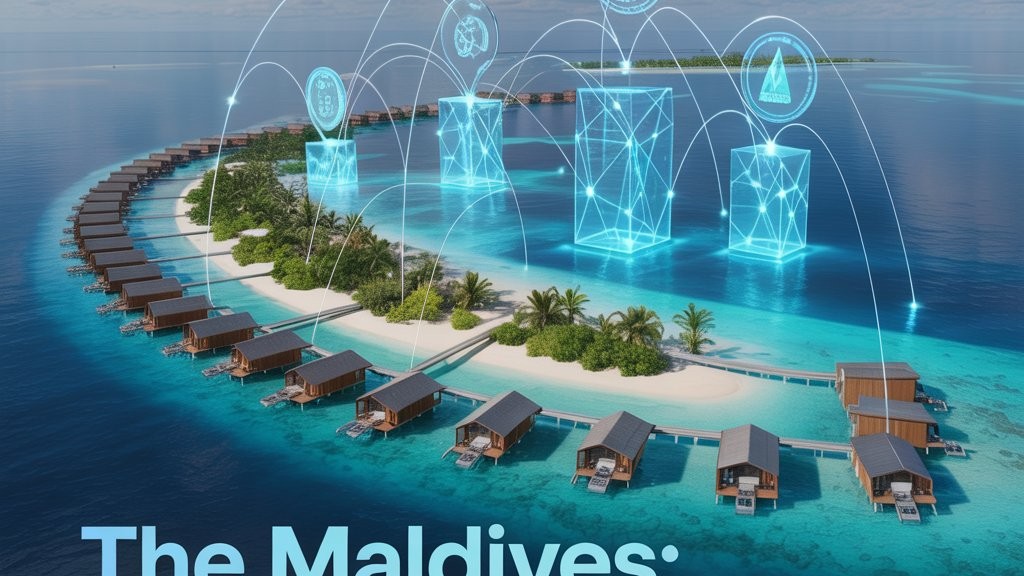
The Maldives: Engineering a New Web3 Hub for Asset Tokenization
How a Tourism-Dependent Island Nation is Building a $9 Billion Blockchain Ecosystem
The pristine beaches and crystal-clear waters of the Maldives have long attracted luxury travelers seeking tropical paradise. But beneath this postcard-perfect surface, the island nation is undertaking one of the most ambitious digital transformations in global finance—positioning itself as a leading hub for blockchain technology and asset tokenization, with particular emphasis on real estate.
The Vision: Malé Web3 City
In May 2025, the Maldives government formalized an agreement with Dubai-based MBS Global Investments to develop the Maldives International Financial Centre (MIFC), a $9 billion blockchain-focused financial hub that exceeds the country's entire annual GDP of approximately $7 billion. Set for completion by 2030, this initiative represents a fundamental pivot in the nation's economic strategy.
The development will span approximately 830,000 square meters and is projected to house 6,500 residents while creating around 16,000 jobs. Government officials anticipate the project could generate over $1 billion in annual revenue by its fifth year and potentially triple the country's GDP within four years.
Government officials, including Finance Minister Moosa Zameer, have emphasized that this initiative marks a departure from traditional borrowing, offering a new model for economic resilience and diversification.
Why the Maldives Needs a Web3 Strategy Now
The Maldives faces mounting economic pressures that make this transformation not just ambitious but necessary:
- Debt Crisis: The nation faces debt obligations of $600-700 million due in 2025 and approximately $1 billion in 2026
- Tourism Dependency: Over 60% of the economy relies on tourism, a vulnerability exposed during the COVID-19 pandemic
- Economic Diversification: The need to build sustainable revenue streams beyond fisheries and hospitality
Finance Minister Moosa Zameer described the country's debt obligations as among the nation's biggest challenges, emphasizing that the MBS Global partnership represents a departure from traditional borrowing models.
The Tokenization Ecosystem: Real Estate as the Foundation
Maldtoken: A Native Stablecoin for Property Transactions
Launching by 2030, Maldtoken is set to become the native currency powering the Web3 financial center.
Central to the MIFC vision is Maldtoken, a stablecoin planned for release by 2030 intended for real estate transactions and everyday purchases within Malé's blockchain ecosystem. This digital currency will serve as the primary medium for:
- Property purchases and fractional ownership
- Daily commercial transactions
- Cross-border real estate investment
- Tourism and hospitality payments
Real Estate Tokenization in Practice
The Maldives is already witnessing real-world applications of tokenized real estate, most notably through high-profile luxury developments.
The Trump International Hotel Maldives Project
In November 2025, the Trump Organization and Saudi developer Dar Global announced a groundbreaking project: the Trump International Hotel Maldives will be tokenized to allow investors to purchase digital shares in the development during early stages.
Project Details:
- Location: 25 minutes by speedboat from Malé
- Scope: Approximately 80 ultra-luxury beach and overwater villas
- Opening: Expected by late 2028
- Investment Model: Development-phase tokenization
What distinguishes this initiative is that the property will be tokenized during the development phase itself, allowing prospective investors to participate from the earliest stage, rather than after construction completion—a novel approach in luxury hospitality.
This tokenization model enables:
- Fractional Ownership: Investors can purchase smaller digital shares instead of requiring large capital outlays
- Early-Stage Participation: Investment opportunities during construction, potentially benefiting from property appreciation
- Enhanced Liquidity: Digital tokens designed for secondary market trading
- Global Accessibility: Borderless investment through blockchain infrastructure
Market Potential and Growth Projections
The global momentum behind real estate tokenization is substantial. Real estate tokenization is projected to become a $4 trillion market by 2035, according to Deloitte Center for Financial Services analysis. Industry forecasts suggest tokenized real-world assets reached $24-30 billion in value in 2025, with institutional investors anticipating significant growth.
Some analysts estimate tokenized real estate could reach $3 trillion by 2030, potentially representing about 15% of real estate assets under management worldwide.
The Regulatory Framework: MIFSA's Role
The Maldives International Financial Services Authority (MIFSA), established by President Mohamed Muizzu in January 2024, serves as the regulatory backbone for this transformation.
Key Regulatory Features
MIFSA will provide regulatory oversight through investor protection frameworks, regulatory sandboxes to encourage responsible investment, and compliance mechanisms.
The regulatory environment includes:
Virtual Asset Services:
- Licensed cryptocurrency exchanges
- Digital asset derivatives platforms
- Blockchain-based lending protocols
- Compliant settlement solutions
Sandbox Initiatives:
- Controlled testing environments for emerging technologies
- Regulatory oversight during product development
- Collaboration between innovators and regulators
- Accelerated deployment pathways for innovative financial services
Tax and Compliance Advantages:
- Zero corporate tax structure
- Tax-free inheritance policies
- Privacy-focused regulatory approach
- Streamlined licensing processes for blockchain firms
Infrastructure: Building the Digital Foundation
Core Technological Components
The MIFC will encompass comprehensive Web3 infrastructure:
Digital Asset Trading Platforms:
- Institutional-grade cryptocurrency exchanges
- Tokenized securities marketplaces
- Digital custody solutions
- Cross-border payment systems
Blockchain Research and Innovation:
- Dedicated research facilities
- Blockchain development laboratories
- Partnership programs with international universities
- Technical training and capacity building
Multi-Currency Financial Services:
- Banking institutions handling both fiat and cryptocurrencies
- Offshore private banking services
- Green finance and sustainable investment products
- Digital asset management firms
Startup Ecosystem:
- Blockchain-focused incubators
- Venture capital access
- Entrepreneur support structures
- International school focused on blockchain education
Sustainable Design
The development plans include a car-free, climate-resilient urban layout powered by renewable energy, addressing the Maldives' vulnerability to climate change while appealing to environmentally conscious technology companies.
Architect Gianni Ranaulo is drawing inspiration from the Maldives' marine ecosystem, creating an eco-conscious design that integrates:
- Renewable energy systems
- Climate-resilient infrastructure
- Smart city technologies
- Digital identification systems
- Token-based governance mechanisms
Competitive Landscape: Challenges and Opportunities
Global Competition
The Maldives enters a highly competitive environment dominated by established blockchain hubs:
Dubai, UAE:
- Virtual Assets Regulatory Authority (VARA) framework
- Dubai's Land Department and VARA signed an agreement in April 2025 to link the land registry to blockchain, enabling real estate tokenization
- Blockchain integration in public services
- Established financial infrastructure
Singapore:
- Progressive regulatory environment
- 800+ cryptocurrency companies
- Major blockchain events like TOKEN2049
- No taxation on cryptocurrency profits
- Monetary Authority support through grants and incubators
Hong Kong:
- Bridge between Western and Chinese markets
- Regulatory clarity for Web3 companies
- Hundreds of fintech firms
- Access to Asian capital markets
Competitive Advantages
Despite these formidable competitors, the Maldives offers unique positioning:
Geographic Strategy: The country's strategic location could enable it to serve crypto markets in Asia, the Middle East, and Africa
Niche Differentiation: Potential focus areas include:
- Sustainable blockchain applications
- Carbon credit tokenization
- Eco-tourism NFTs
- DeFi tools for small island economies
- Climate-resilient financial technologies
Political and Economic Factors:
- Political stability
- Strong air connectivity to major markets
- Proximity to India and Gulf regions
- Government commitment to digital transformation
Critical Challenges
Regulatory Development:
The Maldives currently lacks comprehensive legal frameworks for cryptocurrency use, blockchain startups, and digital asset trading. Success requires:
- Tiered regulatory model balancing innovation and risk
- Digital asset licensing regime
- ICO guidelines
- Robust KYC and AML protocols
- Securities law compliance
Human Capital:
The Maldives lacks extensive experience with cryptocurrency and has limited local expertise in blockchain technology. Addressing this requires:
- Significant investment in local training programs
- Recruitment of international expertise
- University partnerships
- Blockchain education initiatives
Market Skepticism:
A senior Indian businessperson noted it won't be easy for Malé to become a regional financial hub given established competitors like Dubai and Mauritius.
International Partnerships and Collaboration
Estonia Partnership
In January 2025, the Maldives and Estonia signed agreements focused on blockchain and Web3 technology adoption. Both countries plan to leverage blockchain and Web3 solutions for enterprise and government applications, with experts suggesting pilot projects will improve transparency and efficiency.
The partnership includes exploration of:
- Blockchain-based identity platforms for Maldivian residents
- Central bank digital currencies (CBDCs)
- Enhanced cybersecurity measures
- AI integration in government services
- Climate change mitigation technologies
Venture Capital Support
The broader Web3 ecosystem is receiving institutional backing. Sigma Capital launched a $100 million fund (Sigma Capital Fund I) targeting early-stage Web3 companies, with plans to support:
- Blockchain infrastructure projects
- Decentralized finance (DeFi) platforms
- Blockchain gaming
- Real-world asset tokenization
- Metaverse applications
Up to 100 early-stage companies will receive funding over three years, with 10 fund-to-fund allocations planned.
The Real Estate Tokenization Process: How It Works
Traditional vs. Tokenized Real Estate Investment
Traditional Model:
- High capital requirements ($500,000+ for luxury properties)
- Illiquid assets locked for years
- Limited investor pool (institutions, high-net-worth individuals)
- Complex cross-border transactions
- Lengthy settlement processes
Tokenized Model:
- Fractional ownership (invest with smaller amounts)
- Enhanced liquidity through secondary markets
- Global investor accessibility via blockchain
- Transparent ownership records
- Automated smart contract governance
- Faster transactions and settlements
Technical Implementation
Asset tokenization in the Maldives follows this general framework:
- Asset Identification: Property selected for tokenization (hotel, villa, commercial building)
- Legal Structure: Special Purpose Vehicle (SPV) created to hold property ownership
- Tokenization: Digital tokens created representing fractional ownership stakes
- Smart Contracts: Automated protocols governing: Profit distributions Governance rights Compliance requirements Transfer restrictions
- Platform Listing: Tokens listed on compliant trading platforms
- Investor Participation: Global investors purchase tokens representing property shares
- Ongoing Management: Smart contracts automatically distribute rental income, manage voting rights, and handle compliance
Governance and Compliance
Tokenized real estate requires sophisticated operational frameworks:
- Distributed ownership structures
- Automated governance through smart contracts
- Regulatory compliance across jurisdictions
- Security protocols against cyber threats
- Transparent audit trails
Economic Impact and Projections
Job Creation and GDP Growth
The MIFC initiative targets substantial economic transformation:
- Employment: 16,000+ new jobs by 2030
- Revenue: Over $1 billion annually by year five
- GDP Impact: Potential tripling within four years
- Resident Population: 6,500 residents in the financial center
Investment Timeline and Funding
Financing Structure:
- Total investment: $8.8-9 billion
- Committed funding: $4-5 billion already secured
- Funding sources: Combination of equity and debt
- Investor base: Family offices and high-net-worth individuals
- Lead investor: MBS Global Investments ($14 billion assets under management)
Development Phases:
- Timeline: Five-year phased development (2025-2030)
- Milestone 1: Regulatory framework establishment (2025-2026)
- Milestone 2: Infrastructure construction (2026-2028)
- Milestone 3: Business attraction and operations (2028-2030)
Risks and Considerations
Regulatory Uncertainty
Risks include fragmented regulatory landscape, liquidity issues, and security vulnerabilities, according to EY analysis. Investors must navigate:
- Varying securities laws across jurisdictions
- Unclear tax treatment in different countries
- Evolving regulatory standards
- Compliance complexity
Market Risks
Liquidity Challenges:
Real estate tokens may lack sufficient trading volume for easy exits, particularly in:
- Niche luxury properties
- Development-phase projects
- Smaller markets
Valuation Uncertainty:
Pricing tokenized real estate during development presents challenges:
- No rental income to value
- Construction risk factors
- Market condition changes
- Completion uncertainties
Technology Risks:
- Smart contract vulnerabilities
- Blockchain security breaches
- Platform failures
- Custody risks
Political and Economic Factors
- Debt Sustainability: Whether tokenization revenues adequately address debt obligations
- Tourism Dependency: Continued reliance on tourism market health
- International Travel Patterns: Sensitivity to global travel disruptions
- Regulatory Execution: Government capacity to implement complex frameworks
Future Outlook: What's Next for the Maldives
Short-Term Priorities (2025-2026)
- Regulatory Framework Finalization: Comprehensive digital asset legislation
- Infrastructure Development: Physical and technological foundation building
- Talent Development: Training programs and international recruitment
- Pilot Projects: Early tokenization initiatives to demonstrate viability
Medium-Term Goals (2027-2029)
- Business Attraction: Onboarding cryptocurrency exchanges, asset managers, and blockchain startups
- Maldtoken Launch: Native stablecoin deployment for real estate and commerce
- Tourism Integration: Cryptocurrency payment acceptance across hospitality sector
- Regional Positioning: Establishing leadership in sustainable blockchain applications
Long-Term Vision (2030 and Beyond)
- Economic Transformation: Reduced tourism dependency through diversified revenue
- Global Recognition: Established position as credible Web3 financial center
- Innovation Leadership: Center of excellence for climate-resilient blockchain solutions
- Model Export: Blueprint for other small island economies
Conclusion: A Bold Experiment in Economic Reinvention
The Maldives' $9 billion bet on blockchain and asset tokenization represents one of the most ambitious economic transformation initiatives undertaken by a small island nation. By leveraging its strategic location, natural appeal, and progressive regulatory approach, the country is positioning itself at the intersection of luxury real estate, digital finance, and sustainable technology.
The Trump International Hotel Maldives and other tokenized real estate projects serve as high-profile test cases for whether blockchain can genuinely democratize access to luxury property investment while providing developers with innovative capital-raising mechanisms.
Success is far from guaranteed. The Maldives must overcome significant challenges: developing robust regulatory frameworks, building local expertise, competing with established hubs, and executing on complex infrastructure projects—all while managing substantial debt obligations and economic vulnerabilities.
However, if the vision materializes, the Maldives could offer a compelling blueprint for how emerging economies can leverage Web3 technologies to achieve economic diversification, debt management, and sustainable growth. The world will be watching as this tropical nation attempts to transform from a tourism destination into a global center for tokenized finance.
The question remains: Will Malé become the world's first true Web3 city, or will it serve as a cautionary tale about the challenges of rapid technological transformation? The answer will shape not only the Maldives' economic future but potentially influence how other nations approach blockchain adoption and asset tokenization in the years ahead.